
INGLES I - SA26-2
VIDEO ABOUT VERB TO BE
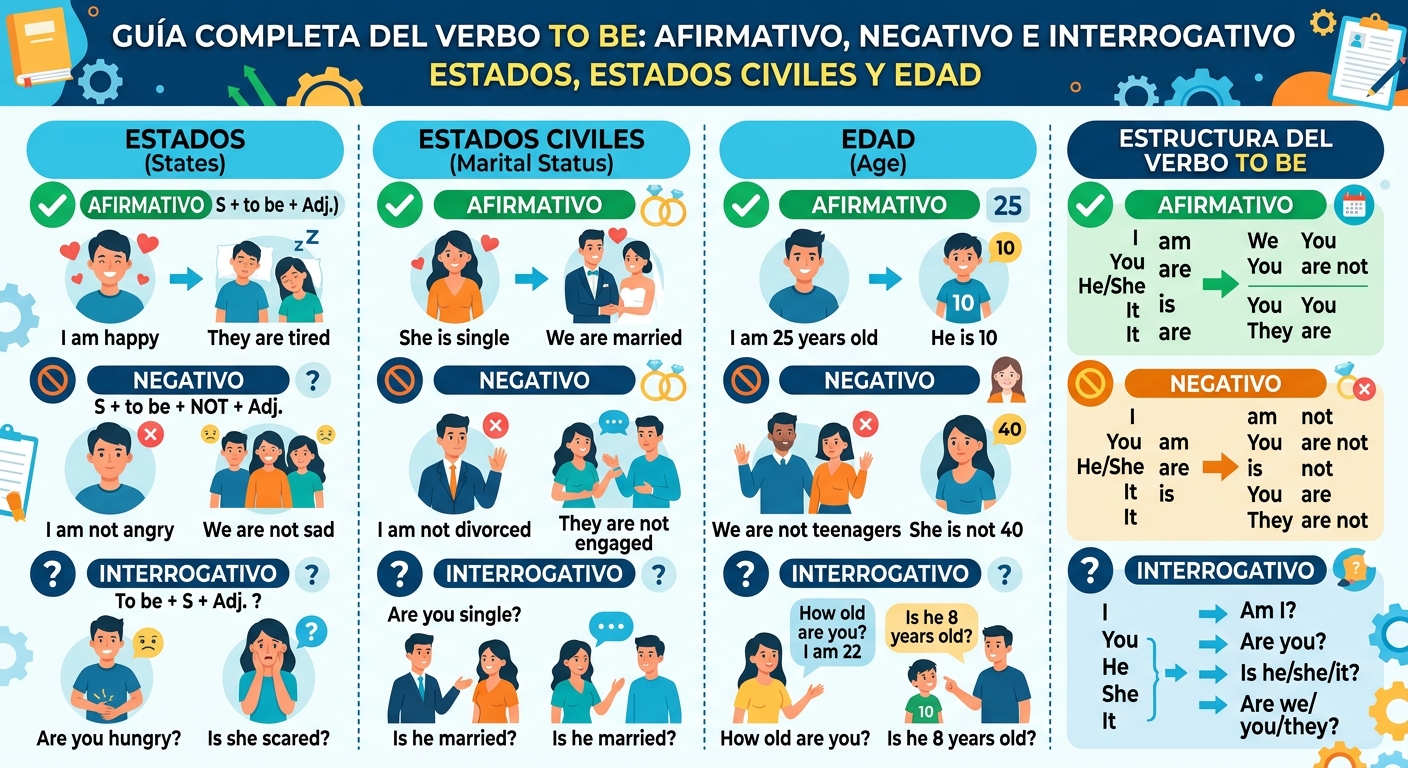
El verbo to be (ser o estar) se divide en tres formas en el presente simple: am, is y are, y cambia su orden según sea afirmativo, negativo o interrogativo.
Reglas y Estructura
- Forma afirmativa: Se usa la estructura
Sujeto + verbo to be + complemento. Ejemplo: You are a student (Tú eres un estudiante). - Forma negativa: Se añade la palabra not después del verbo to be con la estructura
Sujeto + verbo to be + not + complemento. Ejemplo: You are not a student (Tú no eres un estudiante). También se pueden usar contracciones como aren't o isn't. - Forma interrogativa: Se cambia el orden colocando el verbo to be al inicio con la estructura
Verbo to be + sujeto + complemento + ?. Ejemplo: Are you a student? (¿Eres un estudiante?).
Haga clic en el enlace https://youtu.be/xeoYcCAnQlU?si=-qk4L2Nmj8v55mse para abrir el recurso.